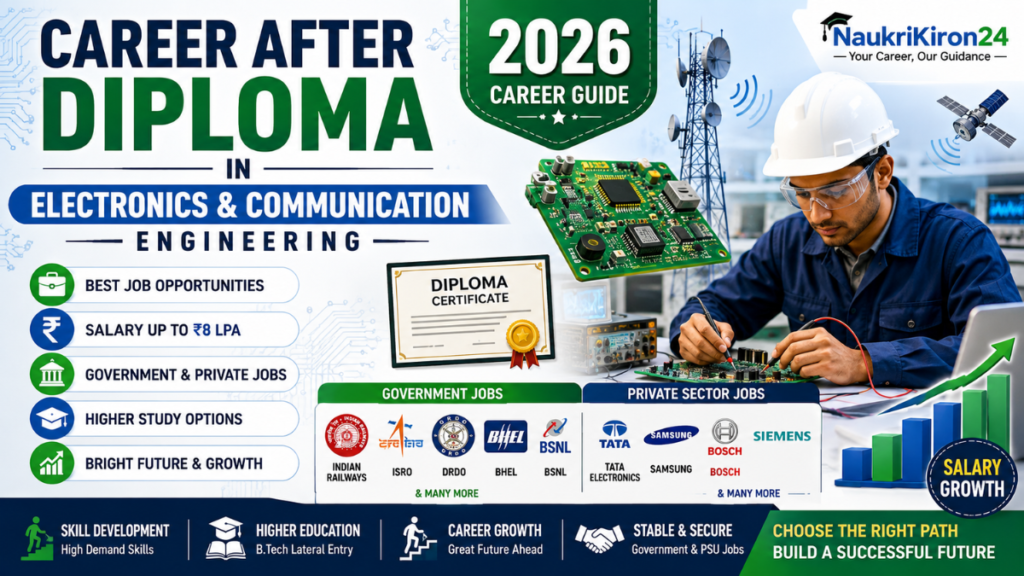
career after diploma: Choosing the right career after completing a Diploma in Electronics and Communication Engineering (ECE) is one of the most important decisions for students and freshers. Whether you want to secure a government job, join a leading private company, continue higher studies, or develop advanced technical skills, there are numerous opportunities available in 2026.
This comprehensive career guide explains every major career option, expected salary, required skills, top recruiters, and future growth to help you make an informed decision.
Career After Diploma in Electronics and Communication Engineering Overview
| Particular | Details |
|---|---|
| Course | Diploma in Electronics & Communication Engineering |
| Duration | 3 Years |
| Eligibility | 10th Pass |
| Career Level | Entry-Level |
| Job Type | Government & Private |
| Higher Education | B.Tech Lateral Entry |
| Average Salary | ₹2.5 LPA – ₹6 LPA |
| Industry | Electronics, Telecom, Manufacturing, Automation, IT |
Why Electronics & Communication Engineering Has a Bright Future
Electronics is used in almost every industry today.
From smartphones to satellites, automobiles to robotics, hospitals to defence systems, electronics engineers are in high demand.
Growing industries include:
- Electronics Manufacturing
- Semiconductor Industry
- Electric Vehicles
- Renewable Energy
- Automation
- Artificial Intelligence
- IoT (Internet of Things)
- Robotics
- 5G Communication
- Consumer Electronics
May you like: How to Become an ITI Instructor in India (2026) – Eligibility, Qualifications, CITS Course, Salary & Complete Career Guide
Best Career Options After Diploma in Electronics and Communication Engineering
1. Private Sector Jobs
Freshers can easily get jobs in:
- Electronics Manufacturing Companies
- PCB Assembly Units
- Mobile Manufacturing Plants
- LED Manufacturing
- Automation Industries
- Automobile Companies
- Electrical Equipment Manufacturing
- Medical Electronics
- Consumer Electronics
Popular Job Roles
- Electronics Technician
- Production Engineer
- Maintenance Engineer
- Quality Inspector
- Quality Engineer
- Assembly Technician
- Service Engineer
- Testing Engineer
- Machine Operator
- SMT Operator
- PCB Technician
2. Government Jobs
Many government departments recruit diploma holders every year.
Popular Recruiters
- Indian Railways
- DRDO
- BEL
- BHEL
- ISRO
- ECIL
- BSNL
- Indian Army Technical Wing
- Indian Navy
- Indian Air Force
- State Electricity Boards
- Public Sector Undertakings (PSUs)
Government jobs offer:
- Job Security
- Pension Benefits
- Medical Facilities
- Housing Allowance
- Promotion Opportunities
3. B.Tech Lateral Entry
Many diploma holders choose higher education.
Advantages
- Direct admission into the 2nd year
- Better salary packages
- Campus placements
- Higher technical knowledge
Popular Branches
- Electronics Engineering
- Electronics & Communication Engineering
- Electrical Engineering
- Instrumentation Engineering
- Robotics Engineering
4. Apprenticeship Opportunities
Many companies recruit diploma holders through apprenticeship programmes.
Benefits include:
- Monthly stipend
- Practical training
- Industry experience
- Higher chance of permanent employment
5. Start Freelancing
You can work independently in:
- PCB Designing
- Electronics Repair
- Arduino Projects
- Embedded Systems
- Home Automation
- Robotics Projects
Best Skills to Learn After Diploma
Learning additional skills significantly improves job opportunities.
Recommended skills:
- PLC Programming
- Embedded C
- Microcontrollers
- Arduino
- Raspberry Pi
- IoT
- Robotics
- AutoCAD Electrical
- PCB Design
- MATLAB
- Python Basics
- Industrial Automation
Highest Paying Private Companies
Some top employers include:
- Samsung
- LG Electronics
- Panasonic
- Bosch
- Tata Electronics
- Dixon Technologies
- Foxconn
- Jabil
- Bharat Electronics Limited (BEL)
- Havells
- Schneider Electric
- Siemens
- ABB
- Honeywell
- Tata Motors
Expected Salary After Diploma
| Experience | Average Salary |
|---|---|
| Fresher | ₹18,000–₹30,000/month |
| 2 Years | ₹30,000–₹45,000/month |
| 5 Years | ₹50,000–₹80,000/month |
| Experienced Engineers | ₹8–15 LPA |
Salary depends on:
- Company
- Skills
- Experience
- Location
- Certifications
Career Growth Path
A diploma holder can progress through the following stages:
- Trainee Engineer
- Technician
- Junior Engineer
- Production Engineer
- Senior Engineer
- Team Leader
- Assistant Manager
- Plant Manager
May you like: Genpact Recruitment 2026 Latest Job for Freshers Apply Online Process Associate and Management Trainee Jobs
Industries Hiring Diploma ECE Engineers
- Telecom
- Manufacturing
- Defence
- Aerospace
- Automobile
- Medical Electronics
- Semiconductor
- Consumer Electronics
- Industrial Automation
- Renewable Energy
Top Certifications
Consider certifications in:
- PLC & SCADA
- Embedded Systems
- Industrial Automation
- IoT
- PCB Designing
- MATLAB
- Python
- AutoCAD Electrical
Tips to Get a Good Job
- Build a professional resume.
- Complete internships or apprenticeships.
- Learn industry-relevant software.
- Improve communication skills.
- Practice technical interview questions.
- Apply through company career pages regularly.
- Keep LinkedIn updated.
- Earn technical certifications.
Future Scope
The demand for electronics professionals is expected to grow rapidly because of:
- Semiconductor manufacturing expansion
- Make in India initiative
- Electric vehicles
- Automation
- Smart manufacturing
- Artificial Intelligence
- IoT devices
- Consumer electronics growth
This makes electronics & communication engineering one of the strongest diploma streams for long-term career growth.
Career After Diploma-Related FAQs
Q1. Is Electronics and Communication Engineering a good career?
Yes. It offers excellent opportunities in the manufacturing, telecom, electronics, defence, automation, and IT sectors.
Q2. Can I get a government job after a Diploma in ECE?
Yes. Many organisations, including Railways, BEL, DRDO, ECIL, BHEL, and BSNL, recruit diploma holders.
Q3. What is the average salary after a Diploma in ECE?
Freshers usually earn between ₹18,000 and ₹30,000 per month, depending on the company and location.
Q4. Can I do B.Tech after a diploma?
Yes. You can take admission through Lateral Entry directly into the second year of B.Tech.
Q5. Which skill is best after a Diploma ECE?
Industrial Automation, PLC, Embedded Systems, IoT, PCB Design, and Python are among the most valuable skills.
Conclusion
A diploma in electronics and communication engineering opens doors to rewarding careers in both the government and private sectors. With the right combination of technical skills, certifications, and practical experience, you can secure a stable job, pursue higher education through B.Tech
Lateral Entry, or even build a successful career in emerging fields such as IoT, automation, robotics, and semiconductor technology. Focus on continuous learning and skill development to stay competitive in the rapidly evolving electronics industry.

1 thought on “Career After Diploma in Electronics and Communication Engineering 2026: Best Jobs, Salary, Higher Studies & Career Options”